The name Grenfell has become synonymous with one of the most devastating residential disasters in modern British history. The Grenfell Tower fire, which occurred in London in June 2017, shocked people around the world and sparked important conversations about building safety, housing policies, and accountability. The tragedy claimed dozens of lives and left a lasting impact on survivors, families, and communities.
Years after the disaster, Grenfell remains an important topic in discussions surrounding social justice and public safety. The incident exposed serious concerns regarding construction materials, emergency procedures, and regulatory oversight. It also highlighted the need for governments and organizations to prioritize human lives above cost-cutting measures.
Understanding the story of Grenfell is essential not only for remembering those who lost their lives but also for ensuring that similar tragedies never happen again. The lessons learned from this event continue to shape policies and safety standards in the United Kingdom and beyond.
What Was Grenfell Tower?
Grenfell Tower was a 24-story residential building located in North Kensington, West London. Built during the 1970s, it housed hundreds of residents from diverse backgrounds and served as an important part of the local community. Many families had lived there for years, creating strong connections with neighbors and the surrounding area.
Before the fire, the tower had undergone a refurbishment project intended to improve the building’s appearance and energy efficiency. These renovations included the installation of exterior cladding and insulation systems. While the upgrades were designed to modernize the structure, they later became the focus of intense scrutiny.
Grenfell Tower represented much more than a residential block. It was home to individuals, families, and communities who relied on the building as a place of security and comfort. The events that unfolded in June 2017 transformed the tower into a symbol of both tragedy and the urgent need for reform.
The Grenfell Tower Fire
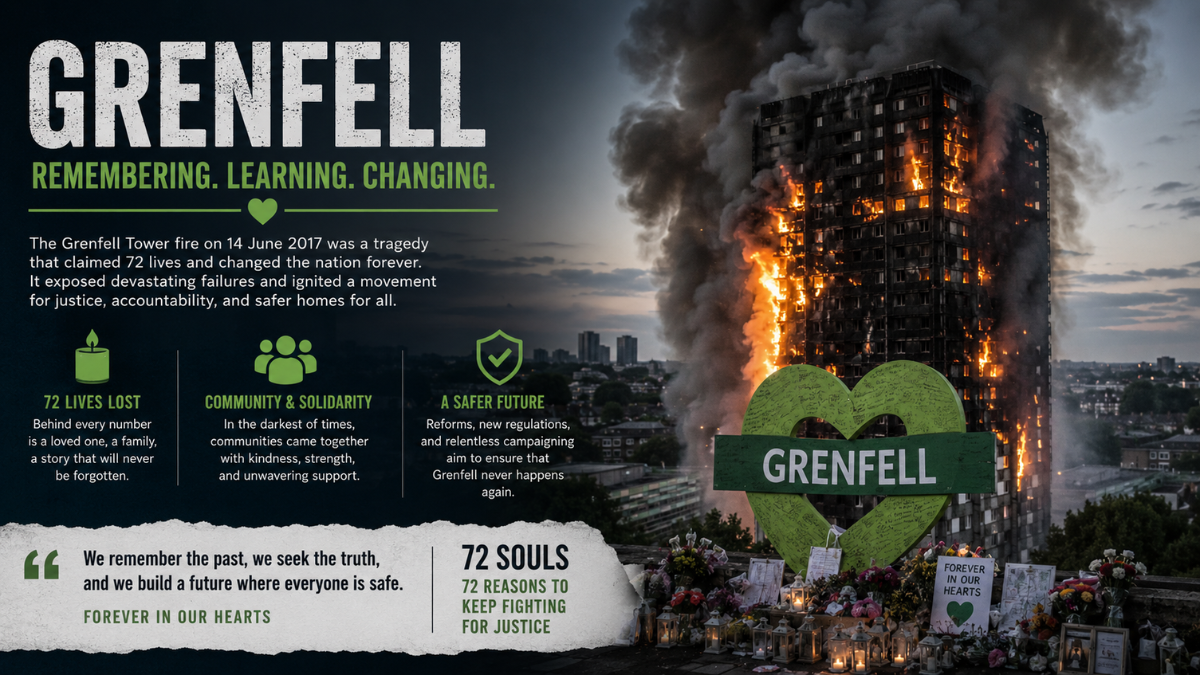
During the early hours of 14 June 2017, a fire broke out in one of the apartments inside Grenfell Tower. Investigations revealed that the blaze originated from a faulty refrigerator. Initially, the fire appeared to be a typical domestic incident, but circumstances quickly changed.
The flames spread rapidly across the exterior of the building, largely due to the combustible materials used in the cladding system. Within a short period, the fire engulfed multiple floors and created dangerous conditions that trapped many residents inside. Emergency services responded immediately, but the scale and speed of the disaster made rescue efforts extremely challenging.
The fire ultimately claimed 72 lives and injured many others. It became one of the deadliest residential fires in the United Kingdom since the Second World War. Images of the burning tower were broadcast worldwide, leaving a profound emotional impact on millions of people.
Causes Behind the Disaster
One of the key factors identified during investigations was the presence of combustible cladding materials on the exterior of the building. These materials allowed the fire to spread much faster than expected, turning a contained apartment fire into a catastrophic event affecting the entire structure.
Investigators also examined issues related to building regulations and safety standards. Questions were raised about whether existing laws were sufficient and whether manufacturers, contractors, and authorities had adequately assessed the risks associated with the refurbishment process.
Another area of concern involved emergency procedures. The “stay put” policy, which advised residents to remain inside their apartments unless directly affected by fire, became controversial because the rapid spread of the flames made the strategy ineffective. The disaster highlighted the importance of reviewing evacuation policies and emergency preparedness.
Public Response and Community Support
Following the tragedy, an extraordinary wave of support emerged from local communities and people across the world. Volunteers provided food, clothing, shelter, and emotional assistance to survivors and displaced families. Charitable organizations and community groups worked tirelessly to help those affected.
The public response also reflected widespread anger and frustration. Many people demanded answers regarding how such a disaster could occur in a modern city. Demonstrations and campaigns called for accountability, transparency, and meaningful reforms to prevent future tragedies.
Survivors and bereaved families played a central role in keeping the issue in the public eye. Their courage and determination helped ensure that the victims would not be forgotten and that the search for justice would continue.
The Grenfell Inquiry
To understand the causes and circumstances surrounding the disaster, the UK government established the Grenfell Tower Inquiry. The investigation aimed to determine how the fire spread so rapidly and whether mistakes or failures contributed to the tragedy.
The inquiry involved testimony from survivors, firefighters, experts, government officials, and representatives from companies involved in the refurbishment. Thousands of documents and pieces of evidence were examined in order to build a comprehensive understanding of the events leading up to the fire.
Over time, the inquiry revealed serious shortcomings in safety practices and regulatory systems. It raised concerns about decision-making processes and highlighted the importance of stronger oversight within the construction industry. The findings have influenced discussions about housing standards and public safety across the country.
Changes in Building Safety Regulations
The Grenfell disaster prompted significant reforms aimed at improving building safety. Authorities introduced stricter regulations regarding the use of cladding materials and implemented measures to ensure that high-rise residential buildings meet higher standards.
Building inspections became more rigorous, and efforts were made to identify structures containing potentially dangerous materials. Many buildings across the United Kingdom underwent assessments, and extensive remediation programs were launched to remove unsafe cladding systems.
The tragedy also encouraged broader discussions about accountability. Policymakers emphasized the importance of ensuring that developers, contractors, and manufacturers adhere to safety requirements. These reforms seek to reduce risks and restore public confidence in residential housing.
The Human Impact of Grenfell
While discussions often focus on regulations and investigations, the human consequences of Grenfell remain at the heart of the story. Survivors experienced unimaginable trauma, losing loved ones, homes, and a sense of security. Many continue to cope with emotional and psychological challenges years later.
Families who lost relatives have worked tirelessly to preserve the memory of those who died. Memorial events, artistic tributes, and community initiatives have helped keep their stories alive. These efforts serve as reminders that the tragedy affected real people with hopes, dreams, and families.
The emotional scars left by Grenfell extend beyond those directly involved. Communities across Britain were deeply affected, and the event became a national moment of reflection. It emphasized the importance of compassion, solidarity, and collective responsibility.
Why Grenfell Still Matters Today
Grenfell remains relevant because the issues exposed by the disaster continue to influence debates about housing, social equality, and public safety. The tragedy demonstrated the consequences of neglecting safety concerns and the importance of listening to residents when they raise warnings.
The event also highlighted inequalities within society. Many observers argued that concerns expressed by residents before the fire had not received the attention they deserved. This aspect of the tragedy sparked broader discussions about representation, accountability, and fairness.
As new policies and regulations are implemented, Grenfell serves as a powerful reminder that safety should always be a priority. Remembering the lessons learned from this disaster is essential for protecting communities and preventing similar incidents in the future.
Conclusion
The story of Grenfell is one of loss, resilience, and the ongoing pursuit of justice. What began as a devastating fire evolved into a national conversation about safety, accountability, and social responsibility. The tragedy changed the lives of countless individuals and left a permanent mark on British society.
Although years have passed since the events of June 2017, the significance of Grenfell remains profound. Investigations, reforms, and community efforts continue to shape the legacy of the disaster. The memory of those who lost their lives serves as a reminder that preventing such tragedies must remain a priority.
Ultimately, Grenfell stands as a lesson for governments, industries, and communities everywhere. By learning from the mistakes of the past and committing to stronger safety standards, societies can honor the victims and help ensure that a tragedy of this scale never happens again.