Understanding
Stocked food refers to the collection of food items that people store for future use. These supplies can include everyday pantry staples, canned goods, frozen products, dried ingredients, and long-lasting snacks. Having stocked food is not just about preparing for emergencies; it is also a practical way to manage household expenses and reduce frequent trips to the grocery store.
Many people associate stocked food with survival situations, but the concept is much broader than that. Families around the world maintain stocked food supplies to ensure they always have ingredients available for meals. Whether it is rice, pasta, beans, canned vegetables, or spices, these items create a dependable reserve that supports daily life.
Modern lifestyles have made stocked food increasingly important. Unexpected weather conditions, busy schedules, and rising food prices encourage consumers to keep essential products on hand. A well-organized stockpile provides convenience while helping households maintain a balanced and consistent diet.
Why Keeping Stocked Food Is a Smart Decision
One of the biggest advantages of stocked food is financial savings. Purchasing products in bulk or during sales allows consumers to reduce their grocery expenses over time. Items with long shelf lives can be stored safely and used whenever needed, preventing unnecessary spending.
Another major benefit is convenience. Busy families often struggle to find time for frequent shopping trips. Having stocked food available means meals can be prepared quickly without last-minute visits to the supermarket. This approach saves time and reduces stress during hectic weeks.
Stocked food also provides peace of mind. Unexpected events such as severe weather, supply chain disruptions, or illness can make shopping difficult. A properly maintained food reserve ensures that households remain prepared and can continue enjoying nutritious meals even during challenging circumstances.
Essential Foods to Keep Stocked
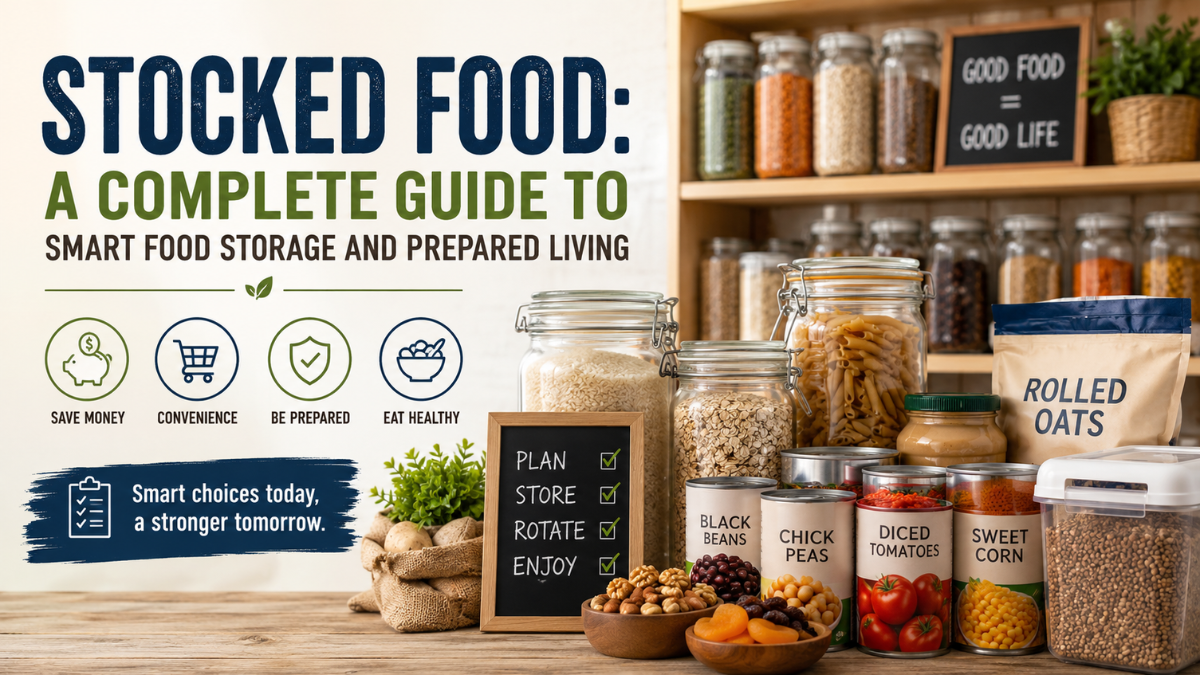
Certain foods are particularly suitable for long-term storage because of their durability and versatility. Grains such as rice, oats, pasta, and flour are among the most popular options. These staples serve as the foundation for numerous meals and can remain usable for extended periods when stored correctly.
Canned foods are another valuable category. Canned vegetables, fruits, beans, soups, and meats offer convenience and long shelf life. They are especially useful because they require minimal preparation and maintain much of their nutritional value.
Protein-rich foods should also be included in any stocked food supply. Dried beans, lentils, peanut butter, nuts, and canned fish are excellent choices. These items provide essential nutrients while helping families maintain balanced diets during both normal and emergency situations.
How to Store Stocked Food Properly
Proper storage plays a vital role in preserving food quality. Most stocked foods should be kept in cool, dry environments away from direct sunlight. Excess heat and moisture can shorten shelf life and encourage spoilage, making storage conditions extremely important.
Organization is equally essential. Labeling containers and arranging products according to expiration dates helps ensure that older items are used first. This “first in, first out” method reduces waste and keeps supplies fresh. Transparent containers and shelving systems can make inventory management easier.
Pest prevention should not be overlooked. Airtight containers protect grains, flour, and other dry goods from insects and rodents. Regular inspections of storage areas help identify problems before they become serious, allowing households to maintain safe and healthy food reserves.
The Importance of Stocked Food During Emergencies
Emergency preparedness is one of the most recognized reasons for maintaining stocked food. Natural disasters, power outages, and transportation disruptions can temporarily affect food availability. Having a supply of non-perishable items ensures that families can continue meeting their nutritional needs.
Health-related emergencies can also make stocked food extremely valuable. During illness or periods of limited mobility, leaving home for groceries may not be practical. A well-stocked pantry provides access to essential ingredients and reduces dependence on outside assistance.
Preparedness does not mean expecting disaster. Instead, it represents responsible planning. Even a modest supply of stocked food can provide reassurance and stability when unexpected situations arise, making everyday life more manageable.
Common Mistakes People Make With Stocked Food
One common mistake is buying excessive quantities without considering actual consumption habits. Food that remains unused for too long may expire, resulting in unnecessary waste and financial loss. It is generally better to stock foods that are already part of regular meals.
Poor organization is another frequent issue. Without proper labeling and rotation, products can become forgotten at the back of shelves. Regular inventory checks help maintain order and ensure that food is consumed before reaching its expiration date.
Some individuals focus exclusively on carbohydrates while neglecting nutritional balance. A complete stocked food supply should include proteins, fruits, vegetables, and healthy fats. Variety not only improves nutrition but also prevents meal fatigue and supports overall well-being.
Building a Budget-Friendly Stocked Food Supply
Creating a food reserve does not require a large investment. Starting gradually is often the most effective strategy. Adding a few extra items during each grocery trip allows supplies to grow steadily without placing pressure on household budgets.
Watching for discounts and seasonal promotions can significantly reduce costs. Bulk purchases are especially beneficial for non-perishable foods with long shelf lives. Comparing prices and planning purchases carefully help maximize value while minimizing waste.
Homemade preservation methods can also contribute to a budget-friendly approach. Freezing leftovers, dehydrating fruits, and storing homemade soups are practical ways to expand food reserves. These techniques provide flexibility while reducing dependence on expensive convenience foods.
Healthy Choices for Long-Term Stocked Food
Nutrition should remain a priority when selecting stocked food. Whole grains, beans, nuts, dried fruits, and low-sodium canned vegetables provide essential vitamins and minerals. These options support overall health and offer greater nutritional value than heavily processed alternatives.
Frozen fruits and vegetables are another excellent addition. They retain much of their nutritional content and provide convenient ingredients for smoothies, soups, and side dishes. Keeping a variety of frozen items helps maintain balanced meals throughout the year.
Hydration is equally important. Bottled water, powdered milk, tea, and electrolyte drinks can complement food supplies and ensure adequate fluid intake. A comprehensive stocked food plan should address both nutritional and hydration needs.
Future Trends in Food Stocking
Advancements in food preservation technology continue to influence how people store food. Vacuum sealing, freeze-drying, and improved packaging methods have extended shelf life while maintaining quality. These innovations make long-term food storage more practical than ever.
Sustainability is also becoming a key consideration. Consumers increasingly seek environmentally friendly packaging and focus on reducing food waste. Reusable containers and careful meal planning support both financial and ecological goals.
Digital tools have further simplified food management. Mobile apps and inventory systems allow households to track expiration dates, monitor supplies, and create shopping lists efficiently. Technology is making stocked food management more organized and accessible for modern families.
Conclusion
Stocked food is more than just an emergency supply; it is a practical approach to everyday living. Maintaining a thoughtful collection of essential foods provides convenience, saves money, and promotes preparedness. Whether the goal is reducing grocery costs or ensuring readiness for unexpected events, a well-managed pantry offers numerous benefits.
The key to successful food stocking lies in balance and organization. Choosing nutritious items, rotating supplies regularly, and storing products properly help maximize freshness and minimize waste. These simple practices create a reliable foundation for healthy and efficient meal planning.
As lifestyles continue to evolve, stocked food will remain an important aspect of household management. With careful planning and smart purchasing decisions, anyone can build a food reserve that supports both daily routines and long-term peace of mind.