
Introduction
Hibiscus Mahajad is a stunning ornamental plant that has gained popularity among gardeners and flower enthusiasts because of its large blooms and vibrant colors. Known for its tropical appearance, this variety of hibiscus adds beauty and elegance to home gardens, patios, and landscapes. Its eye-catching flowers and relatively simple care requirements make it an attractive choice for both beginners and experienced gardeners.
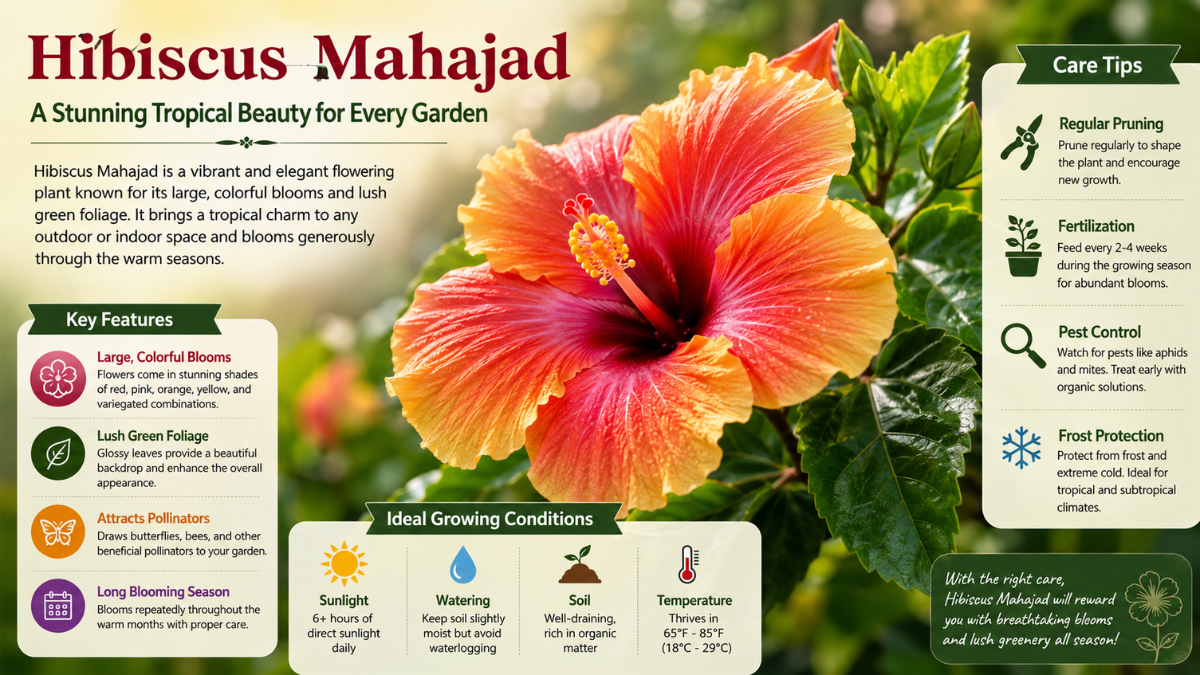
Unlike ordinary flowering plants, Hibiscus Mahajad stands out because of its unique petals and lush green foliage. The flowers often feature striking shades of red, pink, orange, yellow, or combinations of these colors, creating an exotic atmosphere wherever the plant is grown. Its ability to bloom repeatedly throughout the warm season makes it especially appealing.
Many people choose Hibiscus Mahajad not only for decorative purposes but also because it attracts butterflies and pollinators. A healthy plant can become the centerpiece of a garden, bringing life and color to outdoor spaces. With proper care, it can thrive for many years and reward gardeners with continuous blooms.
Characteristics of Hibiscus Mahajad
One of the most remarkable features of Hibiscus Mahajad is its large and colorful flowers. These blooms can reach impressive sizes and often display beautiful gradients or contrasting colors. Their tropical appearance makes them a favorite among collectors and landscape designers.
The plant itself usually grows as a shrub with dense green leaves that provide an attractive background for the flowers. Depending on growing conditions and climate, Hibiscus Mahajad can reach several feet in height and width. Its bushy growth habit allows it to be shaped through regular pruning, making it suitable for various garden styles.
Another characteristic that distinguishes Hibiscus Mahajad is its long flowering season. In warm climates, the plant may produce blooms continuously for much of the year. Each flower lasts only a short time, but new buds develop regularly, ensuring a constant display of color.
Origins and Natural Habitat
Hibiscus plants are generally native to tropical and subtropical regions around the world. Hibiscus Mahajad belongs to a group of ornamental hybrids that have been cultivated to enhance flower size, color, and overall appearance. These hybrids have become increasingly popular due to their extraordinary beauty.
The plant thrives best in warm environments where temperatures remain relatively mild. It prefers sunny locations and grows particularly well in regions with high humidity. In colder climates, many gardeners cultivate Hibiscus Mahajad in containers so it can be moved indoors during winter.
Because of its tropical origins, the plant is sensitive to frost. Exposure to freezing temperatures can damage the leaves and flowers. As a result, gardeners living in cooler areas often provide additional protection to ensure the plant survives throughout the year.
Growing Conditions for Hibiscus Mahajad
Providing the right growing conditions is essential for maintaining a healthy Hibiscus Mahajad. The plant requires plenty of sunlight to produce abundant flowers. Ideally, it should receive at least six hours of direct sunlight each day. More sunlight generally leads to stronger growth and more vibrant blooms.
The soil should be well-draining and rich in organic matter. Good drainage prevents root rot, which can occur if the roots remain in excessively wet conditions. Adding compost or organic fertilizers helps improve soil quality and supplies important nutrients for growth.
Temperature and humidity also play a major role in the plant’s development. Hibiscus Mahajad prefers warm temperatures ranging from 65°F to 85°F. Moderate humidity encourages healthy foliage and flower production. In dry environments, occasional misting can help maintain adequate moisture levels.
Watering and Fertilization Requirements
Consistent watering is important for Hibiscus Mahajad, especially during the growing season. The soil should remain slightly moist but never waterlogged. Overwatering can lead to fungal problems, while underwatering may cause the buds to drop before blooming.
During hot weather, the plant may require more frequent watering. Container-grown specimens usually dry out faster and need closer monitoring. Checking the soil regularly helps determine when additional moisture is needed.
Fertilization supports vigorous growth and abundant flowering. A balanced fertilizer containing essential nutrients such as nitrogen, phosphorus, and potassium is recommended. Many gardeners apply fertilizer every few weeks during spring and summer to encourage continuous blooms and maintain healthy foliage.
Pruning and Maintenance Tips
Regular pruning helps keep Hibiscus Mahajad healthy and attractive. Removing dead or damaged branches improves air circulation and reduces the risk of disease. Pruning also encourages new growth, which often leads to increased flowering.
Shaping the plant allows gardeners to control its size and maintain a tidy appearance. Light pruning throughout the growing season is usually sufficient. More extensive pruning is often performed during late winter or early spring before new growth begins.
In addition to pruning, routine maintenance includes removing spent flowers and inspecting the plant for signs of pests or disease. Early detection allows problems to be addressed before they become severe, ensuring that the plant remains healthy and productive.
Common Pests and Diseases
Like many ornamental plants, Hibiscus Mahajad can be affected by certain pests. Aphids, whiteflies, spider mites, and mealybugs are among the most common insects that attack the plant. These pests feed on the sap and may weaken the plant if left untreated.
Fungal diseases can also develop under unfavorable conditions. Excessive moisture and poor air circulation increase the likelihood of problems such as root rot and leaf spot. Maintaining proper watering practices and spacing plants appropriately can help minimize these issues.
Natural remedies and insecticidal soaps are often effective in controlling minor infestations. In more serious cases, specialized treatments may be necessary. Regular inspection remains one of the best ways to prevent long-term damage.
Landscaping Uses of Hibiscus Mahajad
Hibiscus Mahajad is widely appreciated for its versatility in landscape design. It can be planted as a standalone specimen, incorporated into flower beds, or used to create colorful hedges. Its large flowers immediately attract attention and provide a tropical feel to any setting.
Container gardening is another popular use for this plant. Decorative pots allow gardeners to place Hibiscus Mahajad on patios, balconies, and entryways where its beauty can be enjoyed up close. Container-grown plants also offer the advantage of mobility during unfavorable weather conditions.
Many landscape designers combine Hibiscus Mahajad with other tropical plants to create lush and vibrant gardens. Its colorful blooms complement palms, ferns, and ornamental grasses, resulting in visually striking outdoor spaces.
Benefits of Growing Hibiscus Mahajad
Growing Hibiscus Mahajad offers several advantages beyond its ornamental value. The plant attracts beneficial pollinators such as butterflies and bees, which contribute to the health of surrounding plants and ecosystems. A garden filled with pollinators often appears more lively and vibrant.
The presence of colorful flowers can enhance the overall appearance of a property and create a relaxing atmosphere. Many homeowners appreciate the sense of tranquility and beauty that flowering plants provide. Hibiscus Mahajad, in particular, serves as a focal point that elevates the visual appeal of landscapes.
Another benefit is the satisfaction that comes from nurturing a thriving plant. Watching buds develop into magnificent flowers brings enjoyment and a sense of accomplishment. With proper care, Hibiscus Mahajad can continue producing stunning blooms year after year.
Conclusion
Hibiscus Mahajad is an exceptional flowering plant admired for its tropical beauty, vibrant colors, and impressive blooms. Its combination of ornamental appeal and relatively simple care requirements makes it a favorite among gardeners around the world.
By providing adequate sunlight, proper watering, nutrient-rich soil, and regular maintenance, growers can enjoy a healthy and flourishing plant. Although pests and diseases occasionally present challenges, preventive care and timely treatment usually keep problems under control.
Whether planted in a garden bed or displayed in decorative containers, Hibiscus Mahajad brings elegance, color, and life to any environment. For anyone seeking a beautiful tropical addition to their landscape, this remarkable plant is certainly worth considering.