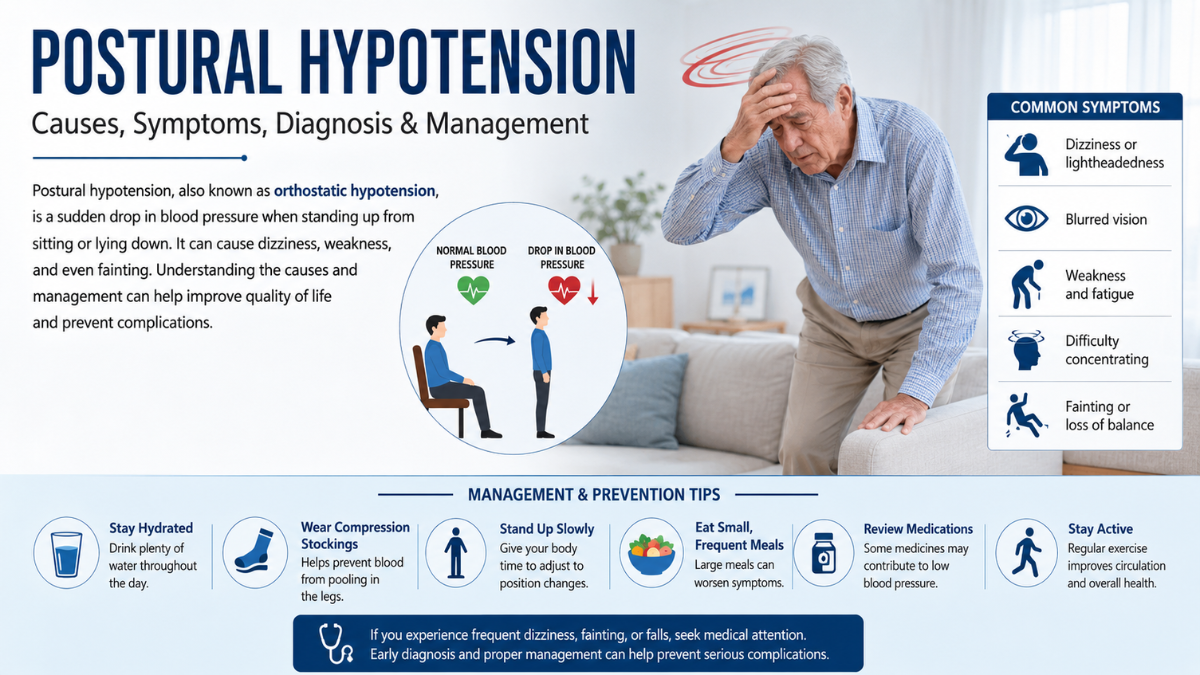
Orthostatic hypotension is a condition that causes a sudden drop in blood pressure when a person stands up from a sitting or lying position. This change in blood pressure can temporarily reduce blood flow to the brain, leading to symptoms such as dizziness, lightheadedness, and even fainting. Although many people occasionally feel dizzy after standing quickly, persistent episodes may indicate an underlying medical issue.
The condition is also referred to as postural hypotension. It can affect individuals of all ages, but it is more common among older adults. As the body ages, the mechanisms responsible for regulating blood pressure become less efficient, making sudden drops more likely. Certain medications and chronic illnesses can further increase the risk.
Understanding orthostatic hypotension is important because it is not merely a minor inconvenience. Frequent episodes can interfere with daily activities and increase the risk of falls and injuries. In some cases, the condition may signal problems involving the nervous system, heart, or endocrine system, making proper evaluation essential.
What Happens in the Body During Orthostatic Hypotension?
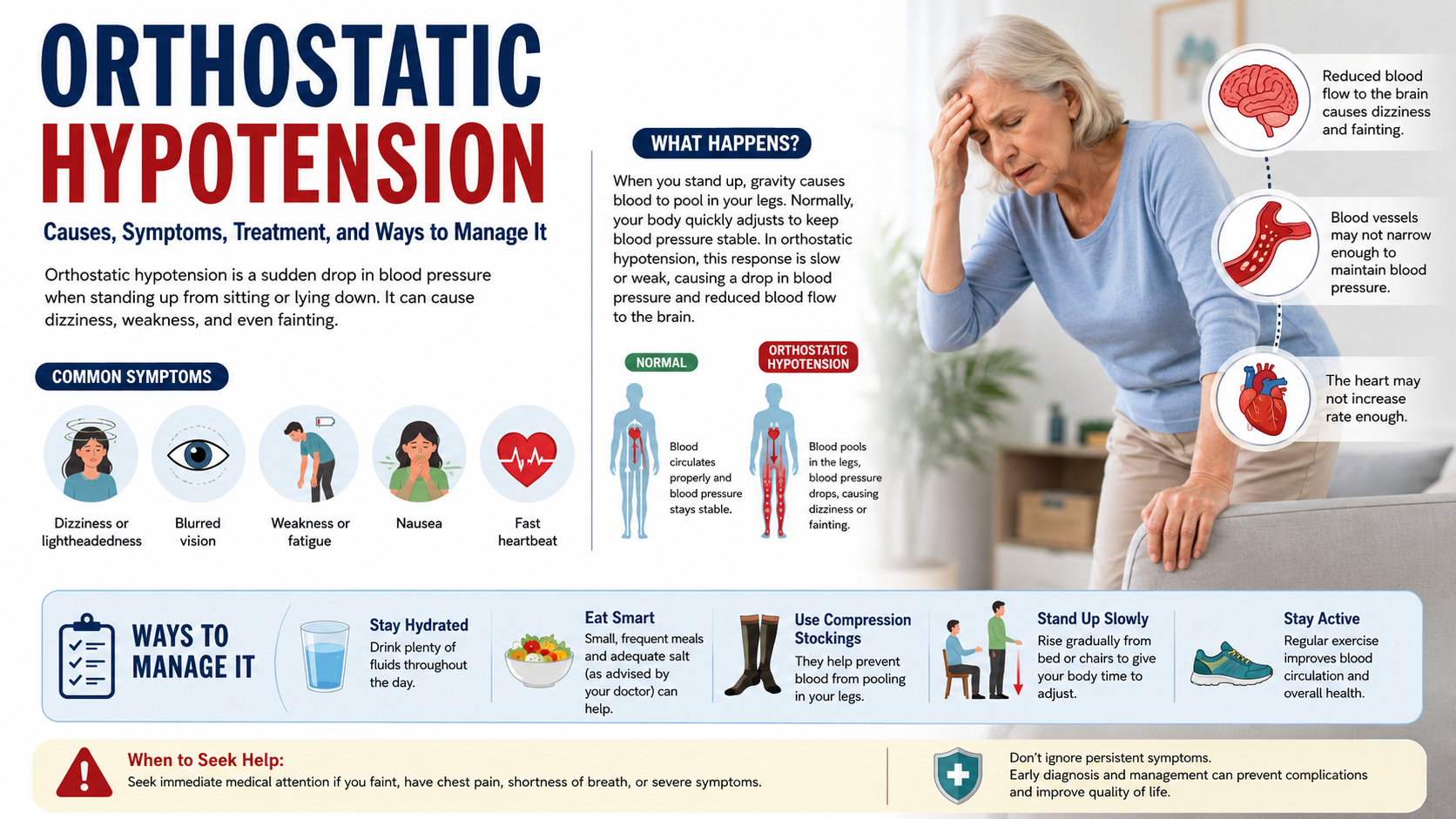
Under normal circumstances, gravity causes blood to pool in the legs when a person stands up. In response, the body quickly adjusts by increasing heart rate and narrowing blood vessels to maintain stable blood pressure and adequate blood flow to the brain. These automatic responses usually occur within seconds.
In people with orthostatic hypotension, these adjustments are delayed or inadequate. As a result, blood pressure falls significantly after standing, causing symptoms that range from mild dizziness to severe fainting. The degree of blood pressure drop can vary from person to person, depending on the underlying cause.
Several body systems work together to maintain blood pressure, including the heart, blood vessels, nervous system, and kidneys. If one or more of these systems fail to function properly, orthostatic hypotension can develop. This explains why the condition is associated with such a wide variety of medical disorders and lifestyle factors.
Common Symptoms of Orthostatic Hypotension
The most recognizable symptom of orthostatic hypotension is dizziness when standing up. Some individuals describe the sensation as feeling unsteady or as though the room is spinning. These symptoms often disappear after sitting or lying down for a few minutes.
Other symptoms may include blurred vision, weakness, fatigue, nausea, and difficulty concentrating. Some people experience headaches or neck pain, while others feel unusually tired throughout the day. The severity and frequency of symptoms can vary considerably.
In more serious cases, orthostatic hypotension may cause fainting or loss of consciousness. Repeated episodes of fainting should never be ignored, as they may lead to injuries and could indicate an underlying cardiovascular or neurological condition. Prompt medical attention is recommended when symptoms become frequent or severe.
Causes and Risk Factors
Dehydration is one of the most common causes of orthostatic hypotension. When the body loses too much fluid due to excessive sweating, vomiting, diarrhea, or inadequate water intake, blood volume decreases. This reduction makes it harder for the body to maintain stable blood pressure when changing positions.
Various medications can also contribute to the condition. Blood pressure drugs, antidepressants, diuretics, medications for Parkinson’s disease, and some heart medications may interfere with the body’s natural blood pressure regulation mechanisms. In some cases, adjusting medication dosages under medical supervision can improve symptoms.
Certain medical conditions increase the likelihood of developing orthostatic hypotension. These include diabetes, Parkinson’s disease, heart disease, adrenal disorders, anemia, and nervous system disorders. Aging itself is another important risk factor, as the body’s ability to compensate for changes in posture gradually declines over time.
How Orthostatic Hypotension Is Diagnosed
Doctors typically begin with a detailed review of symptoms and medical history. Information about medications, chronic illnesses, and the circumstances surrounding dizziness or fainting episodes helps identify potential causes. A physical examination is also an important part of the evaluation process.
Blood pressure measurements are often taken while the patient is lying down, sitting, and standing. A significant drop in blood pressure after standing can confirm the diagnosis. In some cases, additional monitoring may be necessary to understand how the condition affects daily life.
Further testing may include blood tests, electrocardiograms, echocardiograms, and tilt-table testing. These examinations help determine whether heart problems, hormonal disorders, or neurological conditions are contributing to the symptoms. Identifying the underlying cause is crucial for choosing the most effective treatment approach.
Treatment Options for Orthostatic Hypotension
Treatment depends largely on the underlying cause. If dehydration is responsible, increasing fluid intake and correcting electrolyte imbalances may significantly improve symptoms. Similarly, modifying medications that contribute to low blood pressure can often provide relief.
Lifestyle adjustments play a major role in managing orthostatic hypotension. Patients are usually advised to stand up slowly, avoid prolonged bed rest, and increase water consumption. Wearing compression stockings may help prevent blood from pooling in the legs, thereby improving circulation.
For individuals with persistent or severe symptoms, medications may be prescribed. Certain drugs can help increase blood pressure or improve blood vessel function. However, medication therapy is generally considered only when lifestyle modifications alone do not provide adequate symptom control.
Lifestyle Changes That Can Help
Maintaining proper hydration is one of the simplest and most effective strategies for managing orthostatic hypotension. Drinking enough water throughout the day supports healthy blood volume and helps stabilize blood pressure. Individuals who sweat heavily or exercise regularly should pay particular attention to fluid replacement.
Dietary adjustments may also be beneficial. Some people are advised by their healthcare providers to moderately increase salt intake, provided they do not have conditions such as heart failure or kidney disease. Eating smaller meals can help reduce post-meal drops in blood pressure, which are common in older adults.
Regular physical activity contributes to better circulation and cardiovascular health. Gentle exercises such as walking, swimming, and cycling can strengthen the body’s ability to regulate blood pressure. Avoiding sudden changes in posture and rising gradually from bed or chairs can further minimize symptoms.
Potential Complications
Although orthostatic hypotension is often manageable, untreated cases can lead to significant complications. Falls are among the most common concerns, particularly in older adults. Even a brief episode of dizziness can result in fractures or head injuries.
Chronic reductions in blood flow may affect overall quality of life. Individuals may limit physical activity out of fear of becoming dizzy or fainting, leading to reduced mobility and loss of independence. Fatigue and difficulty concentrating can also interfere with work and daily responsibilities.
In some situations, orthostatic hypotension may indicate a serious underlying disorder. Conditions affecting the nervous system or cardiovascular system require timely diagnosis and treatment. Persistent symptoms should therefore never be dismissed as a normal part of aging.
When to Seek Medical Attention
Occasional mild dizziness after standing quickly is relatively common and may not necessarily indicate a medical problem. However, repeated episodes of lightheadedness, weakness, or fainting warrant professional evaluation. Early diagnosis can help prevent complications and improve long-term outcomes.
Immediate medical attention should be sought if symptoms are accompanied by chest pain, shortness of breath, severe headaches, irregular heartbeat, or loss of consciousness. These signs may point to more serious cardiovascular or neurological issues that require urgent care.
People with chronic diseases such as diabetes, Parkinson’s disease, or heart conditions should discuss any episodes of dizziness with their healthcare provider. Monitoring symptoms and maintaining regular checkups can help ensure effective management and reduce the risk of complications.
Conclusion
Orthostatic hypotension is a condition characterized by a sudden drop in blood pressure when standing up, often causing dizziness, weakness, and fainting. While it may occur occasionally in healthy individuals, persistent symptoms can signal underlying medical conditions that deserve attention.
Fortunately, many cases can be managed successfully through lifestyle changes, adequate hydration, and appropriate medical treatment. Understanding the causes and recognizing the symptoms are important steps toward maintaining better cardiovascular health and preventing unnecessary complications.
You May Also Read
Anyone experiencing frequent episodes of dizziness or fainting should consult a healthcare professional for a thorough evaluation. With proper diagnosis and management, most people with orthostatic hypotension can continue to lead active and healthy lives.