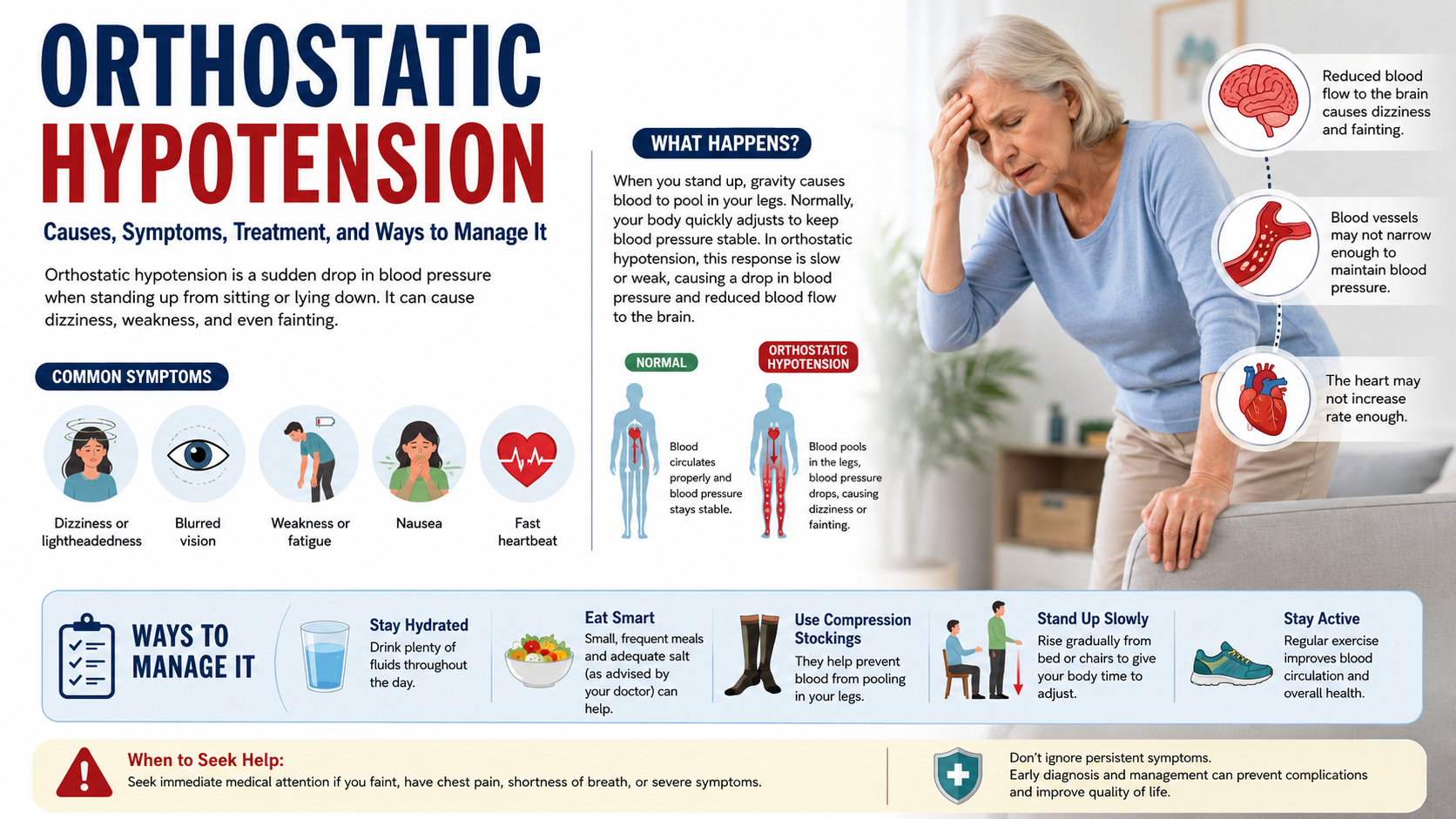
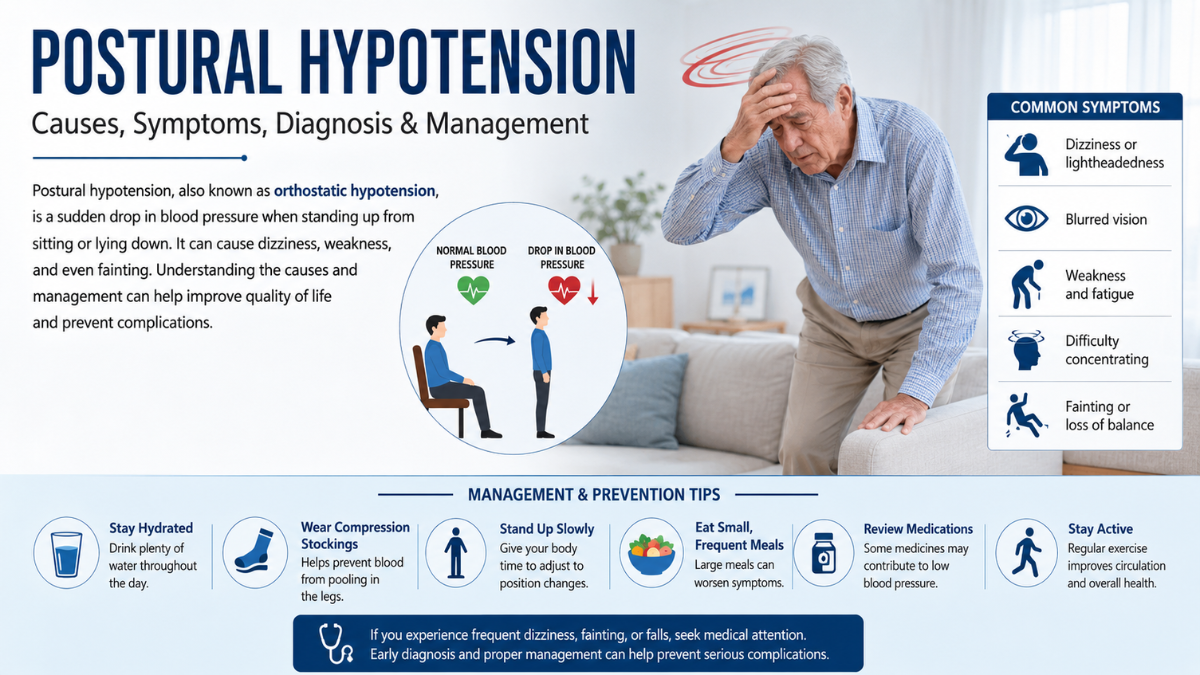
Postural hypotension, also known as orthostatic hypotension, is a condition in which a person’s blood pressure drops suddenly when they stand up from a sitting or lying position. This sudden decrease in blood pressure can cause dizziness, lightheadedness, and sometimes even fainting. Although the condition is often temporary, it can become a recurring issue for some individuals and significantly affect their daily lives.
The human body normally adjusts blood pressure automatically when changing positions. Gravity causes blood to pool in the legs when standing, and the nervous system responds by increasing heart rate and narrowing blood vessels to maintain proper blood flow to the brain. In people with postural hypotension, this adjustment does not happen effectively, leading to symptoms that appear shortly after standing.
Postural hypotension is relatively common, especially among older adults. However, it can affect people of any age depending on underlying health conditions, medications, dehydration, or lifestyle factors. Understanding how this condition works is the first step toward managing it effectively.
Common Causes of Postural Hypotension
There are many reasons why someone may experience postural hypotension. One of the most common causes is dehydration. When the body loses too much fluid through sweating, illness, vomiting, or inadequate water intake, blood volume decreases. Lower blood volume makes it harder for the body to maintain stable blood pressure when standing.
Certain medications can also contribute to this condition. Blood pressure medicines, antidepressants, diuretics, and medications used for Parkinson’s disease are known to affect blood pressure regulation. In some cases, adjusting medication under medical supervision may help reduce symptoms.
Underlying medical conditions can also play a role. Diabetes, heart disease, nervous system disorders, and thyroid problems can interfere with the body’s ability to control blood pressure. Additionally, prolonged bed rest or extended periods of inactivity may weaken the body’s normal circulatory responses, increasing the likelihood of experiencing postural hypotension.
Signs and Symptoms to Watch For
The most recognizable symptom of postural hypotension is dizziness that occurs shortly after standing up. Many people describe feeling lightheaded or unsteady, especially when getting out of bed in the morning or standing after sitting for a long time. These episodes are usually brief but can be unsettling.
Some individuals experience blurred vision, weakness, fatigue, or nausea. Others may notice difficulty concentrating or a feeling that they might faint. In severe cases, actual loss of consciousness can occur, which may increase the risk of injuries due to falls.
Symptoms may vary depending on the severity of the blood pressure drop and the person’s overall health. Some people experience occasional episodes, while others deal with symptoms regularly. Paying attention to patterns and triggers can help healthcare providers determine the underlying cause and recommend appropriate treatment.
Who Is Most at Risk?
Older adults are among the groups most commonly affected by postural hypotension. As people age, the body’s natural mechanisms for regulating blood pressure may become less efficient. In addition, many older individuals take medications or have chronic conditions that can increase the risk of blood pressure fluctuations.
People with neurological disorders such as Parkinson’s disease or multiple system atrophy are also more susceptible. These conditions can damage the nerves responsible for controlling blood pressure and heart rate, making it difficult for the body to respond appropriately to changes in posture.
Pregnant women, athletes recovering from intense exercise, and individuals who have experienced prolonged periods of bed rest may also develop temporary episodes of postural hypotension. Understanding personal risk factors is important because it allows individuals to take preventive measures before symptoms become severe.
How Postural Hypotension Is Diagnosed
Diagnosing postural hypotension usually begins with a detailed medical history and physical examination. Healthcare providers often ask about symptoms, medications, and existing health conditions to identify possible contributing factors. A clear description of when symptoms occur can provide valuable clues.
Blood pressure measurements are taken while the person is lying down, sitting, and standing. A significant drop in blood pressure within a few minutes of standing is one of the key indicators used to confirm the diagnosis. These measurements help determine the extent of the problem.
Additional tests may be recommended depending on the suspected cause. Blood tests, electrocardiograms, echocardiograms, or tilt-table tests can provide further information about heart function and nervous system activity. Identifying the underlying cause is essential because successful treatment often depends on addressing the condition responsible for the blood pressure changes.
Treatment Options for Postural Hypotension
Treatment for postural hypotension depends largely on the underlying cause. If dehydration is responsible, increasing fluid intake may quickly improve symptoms. In cases where medications are contributing to the problem, healthcare providers may adjust dosages or prescribe alternative medications.
Lifestyle modifications are often highly effective. Patients are commonly advised to stand up slowly, avoid sudden position changes, and elevate the head of the bed slightly while sleeping. Wearing compression stockings may also help improve blood circulation and reduce blood pooling in the legs.
In more severe cases, medications may be prescribed to help increase blood pressure or improve the body’s response to standing. These treatments are usually reserved for individuals whose symptoms persist despite lifestyle adjustments. Medical supervision is important to ensure that treatment remains both effective and safe.
Practical Ways to Prevent Episodes
Preventing postural hypotension often involves simple but consistent habits. Drinking plenty of water throughout the day is one of the most effective strategies. Proper hydration helps maintain adequate blood volume and supports healthy circulation.
Changing positions gradually can make a significant difference. Instead of standing up immediately after lying down, it is beneficial to sit on the edge of the bed for a few moments before rising. This gives the body time to adjust and reduces the likelihood of dizziness.
Maintaining regular physical activity can also strengthen the cardiovascular system and improve blood flow. Moderate exercise, combined with a balanced diet and avoiding excessive alcohol consumption, contributes to better blood pressure regulation. Small lifestyle adjustments can often prevent symptoms and improve overall quality of life.
When to Seek Medical Attention
Occasional dizziness after standing up may not always indicate a serious problem, but recurring symptoms should not be ignored. Frequent episodes of lightheadedness, fainting, or weakness can interfere with daily activities and increase the risk of falls and injuries.
Medical attention is especially important if symptoms are accompanied by chest pain, shortness of breath, irregular heartbeat, or neurological changes. These signs may indicate a more serious underlying condition requiring prompt evaluation and treatment.
Seeking medical advice early can help identify the root cause and prevent complications. Many cases of postural hypotension can be managed successfully, allowing individuals to maintain an active and healthy lifestyle with minimal disruption.
Living Well with Postural Hypotension
Although postural hypotension can be frustrating, it is often manageable with proper care and awareness. Understanding triggers, staying hydrated, and following medical recommendations can greatly reduce the frequency and severity of symptoms.
Regular communication with healthcare providers is important, particularly for individuals with chronic illnesses or those taking multiple medications. Monitoring symptoms and reporting changes can help ensure that treatment plans remain effective over time.
With the right combination of lifestyle changes and medical support, most people with postural hypotension can continue to enjoy their normal activities. Knowledge and proactive management are key to maintaining good health and minimizing the impact of this condition.
Conclusion
Postural hypotension is a common condition characterized by a sudden drop in blood pressure when standing up. While it can cause dizziness, weakness, and fainting, many cases can be successfully managed through hydration, lifestyle changes, and appropriate medical treatment.
Recognizing the symptoms and understanding the underlying causes are essential for preventing complications. Whether the condition is temporary or chronic, early diagnosis and proper management can significantly improve quality of life.
By adopting healthy habits and seeking medical advice when necessary, individuals with postural hypotension can effectively control their symptoms and maintain an active, fulfilling lifestyle.