
Introduction
Serum inorganic phosphate is an essential laboratory parameter that reflects the amount of phosphate circulating in the blood. Phosphate is a mineral that plays a vital role in many biological processes, including energy production, bone formation, and cellular function. Although calcium often receives more attention, phosphate is equally important for maintaining overall health.
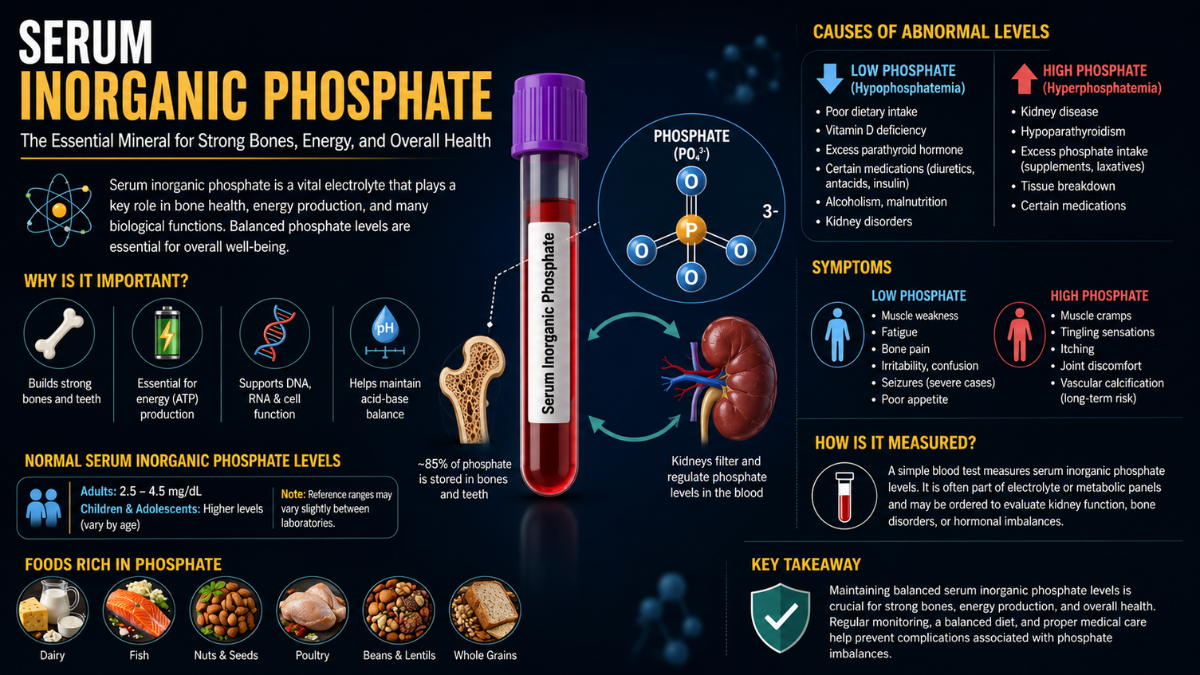
In the human body, approximately 85% of phosphate is stored in bones and teeth, while the remaining amount is found in soft tissues and blood. The concentration of serum inorganic phosphate is carefully regulated by the kidneys, hormones, and dietary intake. Even slight disturbances in phosphate balance can affect numerous physiological functions.
Healthcare professionals frequently measure serum inorganic phosphate levels to evaluate kidney function, bone metabolism, and various endocrine disorders. Understanding this blood marker can help identify underlying health conditions and guide appropriate treatment strategies.
What Is Serum Inorganic Phosphate?
Serum inorganic phosphate refers to the amount of free phosphate ions present in the bloodstream. Unlike organic phosphate, which is bound to proteins and other molecules, inorganic phosphate is readily available for use in metabolic activities throughout the body.
Phosphate is a critical component of ATP (adenosine triphosphate), the molecule responsible for storing and transferring energy within cells. Without sufficient phosphate, cells cannot produce energy efficiently, leading to weakness and impaired bodily functions. Phosphate also contributes to DNA and RNA synthesis, making it indispensable for growth and tissue repair.
Another important role of phosphate involves maintaining acid-base balance. Together with other electrolytes, phosphate acts as a buffer that helps stabilize the body’s pH levels. This function is essential for ensuring that enzymes and cellular processes operate under optimal conditions.
Normal Serum Inorganic Phosphate Levels
Normal serum inorganic phosphate levels vary depending on age. In adults, the reference range generally falls between 2.5 and 4.5 mg/dL. Children and adolescents typically have higher levels because their growing bones require greater amounts of phosphate.
Laboratories may use slightly different reference values based on their testing methods. Therefore, physicians interpret phosphate levels alongside clinical symptoms and other laboratory findings. A result outside the standard range does not automatically indicate disease but should be evaluated in context.
Several factors can influence serum phosphate concentrations. Dietary habits, medications, hormonal activity, kidney function, and even the time of day can affect laboratory measurements. Because phosphate levels fluctuate naturally, healthcare providers may recommend repeat testing if results appear abnormal.
Why Is Serum Inorganic Phosphate Important?
Serum inorganic phosphate is crucial for maintaining healthy bones and teeth. Together with calcium, phosphate forms hydroxyapatite crystals that provide structural strength to the skeletal system. Deficiencies or excesses can compromise bone integrity and increase the risk of fractures.
The mineral also supports energy metabolism. ATP, often called the body’s energy currency, depends on phosphate molecules for its function. Muscles, nerves, and organs rely on ATP to perform their daily activities efficiently. Consequently, abnormal phosphate levels can cause fatigue, weakness, and impaired physical performance.
Furthermore, phosphate participates in numerous biochemical reactions. It contributes to cellular signaling, enzyme regulation, and membrane structure. Because of these widespread roles, disturbances in phosphate balance can have systemic consequences affecting multiple organ systems.
Causes of Low Serum Inorganic Phosphate
Low serum inorganic phosphate, known as hypophosphatemia, may result from inadequate dietary intake. Severe malnutrition, alcoholism, and prolonged starvation can reduce phosphate availability and lead to deficiency. Although uncommon in healthy individuals, nutritional deficiencies remain a concern in certain populations.
Kidney disorders and hormonal imbalances can also contribute to hypophosphatemia. Conditions involving excessive parathyroid hormone production increase phosphate excretion through the kidneys. Likewise, vitamin D deficiency reduces intestinal phosphate absorption, further lowering blood levels.
Certain medications and medical treatments may decrease serum phosphate concentrations. Diuretics, antacids containing aluminum, and insulin therapy are examples of factors that can contribute to hypophosphatemia. In severe cases, symptoms may include muscle weakness, confusion, respiratory difficulties, and bone abnormalities.
Causes of High Serum Inorganic Phosphate
Elevated serum inorganic phosphate, known as hyperphosphatemia, is most commonly associated with kidney disease. Healthy kidneys remove excess phosphate from the bloodstream, but impaired kidney function can lead to phosphate accumulation and abnormally high levels.
Hormonal disorders and excessive phosphate intake may also contribute to hyperphosphatemia. Hypoparathyroidism, for example, reduces phosphate excretion and causes levels to rise. Additionally, overuse of phosphate-containing laxatives or supplements can increase blood phosphate concentrations.
High phosphate levels are particularly concerning because they may promote calcium-phosphate deposits in blood vessels and soft tissues. These deposits can increase the risk of cardiovascular complications and contribute to long-term health problems, especially in patients with chronic kidney disease.
Symptoms Associated with Abnormal Phosphate Levels
Mild abnormalities in serum inorganic phosphate often produce no noticeable symptoms. As a result, many cases are detected incidentally during routine blood tests. However, severe disturbances can have significant clinical effects.
Low phosphate levels may cause muscle weakness, fatigue, bone pain, and decreased appetite. In more serious cases, patients may experience neurological symptoms such as irritability, confusion, and seizures. Chronic hypophosphatemia can also impair bone mineralization and contribute to osteomalacia.
High phosphate levels frequently cause symptoms related to calcium imbalance. Individuals may experience muscle cramps, tingling sensations, itching, and joint discomfort. Long-standing hyperphosphatemia can lead to vascular calcification and increase the risk of cardiovascular disease.
How Serum Inorganic Phosphate Is Measured
Measurement of serum inorganic phosphate is performed through a simple blood test. A healthcare professional collects a blood sample, which is then analyzed in a laboratory using standardized biochemical techniques. The test is often included in electrolyte panels or metabolic profiles.
Doctors may order phosphate testing for patients with kidney disease, bone disorders, vitamin D abnormalities, or suspected endocrine conditions. Monitoring phosphate levels is especially important for individuals receiving dialysis or medications that affect mineral metabolism.
In some cases, physicians combine serum phosphate testing with measurements of calcium, magnesium, vitamin D, and parathyroid hormone. Evaluating these markers together provides a more complete understanding of mineral balance and helps identify the underlying cause of abnormal results.
Managing Abnormal Serum Inorganic Phosphate Levels
Treatment of phosphate disorders depends on the underlying cause. For individuals with low phosphate levels, increasing dietary intake or using phosphate supplements may be sufficient. Foods rich in phosphate include dairy products, fish, poultry, nuts, beans, and whole grains.
Management of hyperphosphatemia often focuses on reducing phosphate intake and improving kidney function when possible. Patients with chronic kidney disease may require phosphate binders, which limit phosphate absorption from the digestive tract. Dietary modifications are also commonly recommended.
Regular monitoring and medical supervision are essential for maintaining appropriate phosphate balance. Because both deficiency and excess can have serious consequences, individualized treatment plans are necessary to ensure safe and effective management.
The Relationship Between Serum Inorganic Phosphate and Kidney Health
The kidneys play a central role in regulating serum inorganic phosphate levels. They filter phosphate from the blood and excrete excess amounts through urine. When kidney function declines, phosphate elimination becomes less efficient, leading to elevated blood concentrations.
Chronic kidney disease is one of the most common causes of persistent hyperphosphatemia. Elevated phosphate levels are associated with increased cardiovascular risk and poorer outcomes in these patients. Therefore, controlling phosphate levels is an important component of kidney disease management.
Early detection of phosphate abnormalities can help prevent complications and improve long-term health outcomes. Regular blood testing and adherence to medical recommendations are crucial for individuals with kidney disorders or other conditions affecting phosphate metabolism.
Conclusion
Serum inorganic phosphate is an essential biochemical marker that provides valuable information about bone health, kidney function, and overall metabolism. Although phosphate may not receive as much attention as other minerals, its role in energy production, cellular function, and skeletal integrity is indispensable.
Abnormal phosphate levels can result from nutritional deficiencies, hormonal disorders, medications, and kidney disease. Both low and high phosphate concentrations have the potential to cause significant health complications if left untreated. Understanding the causes and consequences of phosphate imbalances is important for timely diagnosis and effective treatment.
Routine monitoring of serum inorganic phosphate, especially in individuals with chronic illnesses, can support early intervention and better clinical outcomes. Maintaining a balanced diet, following medical advice, and undergoing regular health evaluations are key steps toward preserving optimal phosphate levels and overall well-being.